




Your health, our priority
A balance of life is achieved through diet, sleep, exercise… However, the most important element is breathing.
Our ability to breathe through our nose gives us many advantages. For example, humans have superior endurance compared to large animals, allowing our ancestors to hunt them effectively. This allowed our ancestors to hunt large animals, which were exhausted before them.

The tongue, located at the intersection of the upper respiratory and digestive systems, plays an essential role in our health. Tongue dysfunctions are common and there are several types. These include atypical swallowing, tongue interposition between the teeth, and a low resting position of the tongue. When the tongue malfunctions or is poorly positioned, it loses muscle tone during sleep. Sometimes, the muscles of the tongue are oversized or adopt an incorrect position in the oral cavity. These irregularities can lead to narrowing of the pharynx, which disrupts breathing and sleep quality.

Tongue Dysfunctions
Lingual dysfunctions such as atypical swallowing or poor resting position can affect sleep quality by disturbing breathing. For example, the excessive volume of the tongue muscles related to dysfunctions, or the low tongue can cause disorders by narrowing the diameter of the pharynx during sleep. With age and lack of exercise, the loss of strength and muscle tone of the tongue worsens. In addition to the increased prevalence of Sleep Disordered Breathing, this can also lead to dysphagia which in turn can lead to choking, lung infections or de-nutrition.

Mouth breathing
Mouth breathing is directly related to tongue dysfunctions which can induce a vicious circle. It will affect facial growth in children, leading to altered dental occlusion, facial disfigurement, or repeated ENT infections.
In addition, it can impact sports performance and endurance, rapid fatigue, and Sleep Disordered Breathing.

Sleep Disordered Breathing (SDB)
Sleep Disordered Breathing (SDB) include obstructive sleep apnea, snoring, airflow limitations. They reflect an altered quality of sleep. SDB can lead to excessive daytime sleepiness, impaired concentration, bruxism, and numerous cardiovascular, metabolic, neurological co-morbidities, intellectual, social or emotional disorders related to the lack of oxygenation.
TRP SOLUTION

With the TRP, treat your disorders related to tongue dysfunction!
Tongue Lab offers an innovative alternative: the TRP (Tongue Right Positioner).
An elegant and non-restrictive device
The TRP is a custom oral device worn only on the upper jaw. Simple to use, it is easy to insert and remove.
Targeted and effective action
Its mode of action is simple: the TRP continuously stimulates the natural reflex of lifting the tongue using its sensory-motor properties. It will reprogram its functions and positions accordingly.

A unique and innovative device
The TRP is unique. Unlike other oral devices, it stimulates and induces tongue reflexes, guiding it to ensure and acquire its natural functions and positions, rather than simply preventing or inhibiting the consequences of dysfunctions.

An environmentally friendly and well-tolerated device
By addressing the cause, the TRP is temporary. It has no severe or long-lasting adverse effects. It exerts no pressure on the face, tongue, teeth, or jaw.
Multiple and progressive effects for a harmonious face and lasting good health
The beneficial effects of the TRP can occur rapidly for some individuals, while gradually for others.

BENEFIT FROM THE TRP ?
You can access documentation on the TRP, the treatment plan, and its action by registering on the Tongue Lab Operations website.
How’s the treatment going?
1.Consultation
With a general practitioner or specialist, a general dentist or a specialist, who diagnoses and prescribes the TRP.
2.Dental impressions
The dentist or orthodontist makes a dental impression which is sent to our laboratories where the custom-made TRP is produced.
3.Placement of the TRP
The dentist fits the TRP in patients’ mouth.

4.Follow-up sessions
A few follow-up sessions with a trained practitioner (dentist or reeducator) enabling the patient to fully benefit from the TRP.
Are you a practitioner and would you like to offer the TRP to your patients?
Practitioners, take care of your patients
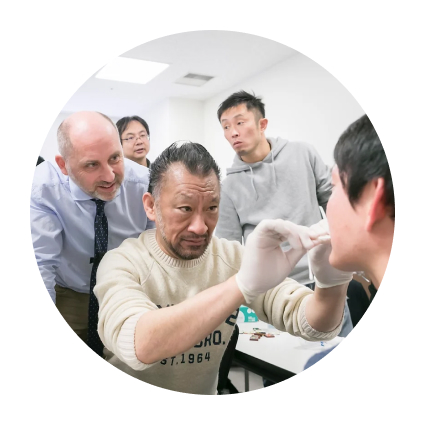
More and more practitioners are training in the management of patients with the TRP device, all over the world.
Do you want your patients to be able to benefit from the TRP?
Our presence :
From Oslo to Tokyo, passing through Paris and Brussels, we are building a network of healthcare professionals and partners to develop and provide access to our solutions”.
Latest news
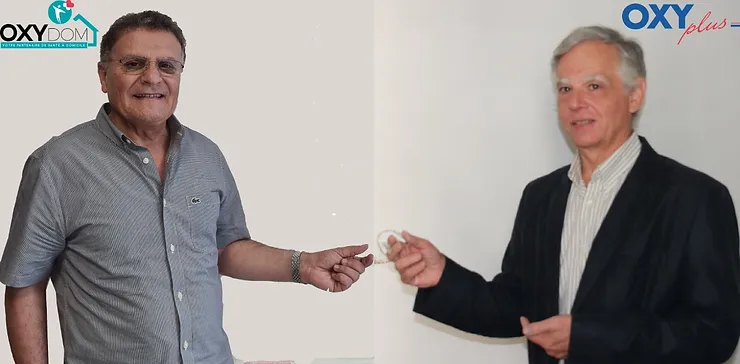
Tongue Lab signs a new partnership with Oxyplus!
Tongue Lab develops and markets the Tongue Right Positioner (TRP). The first medical device for sensory-motor stimulation of the tongue, it aims at a natural improvement of its position, its functions, and its muscular tone. The simplicity of the device makes it easy to adapt.
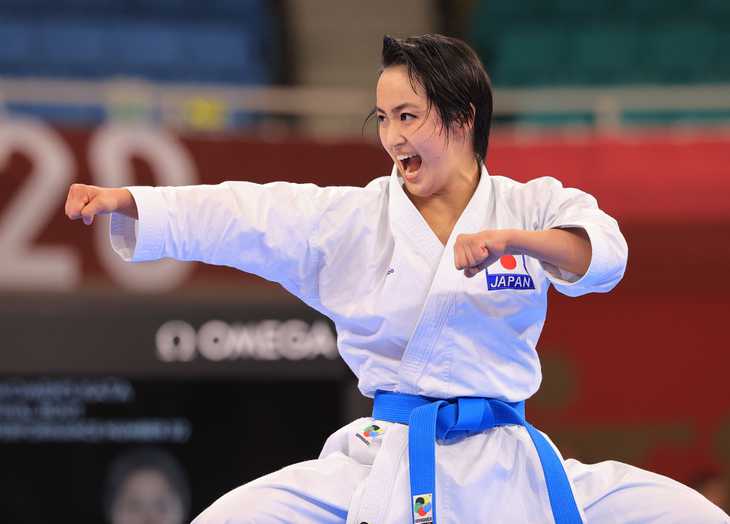
Karate Women’s Silver Kiyou Shimizu.
English Translation of article published on Aug, 7th, 2021 in Sports Hochi Japanese daily paper https://hochi.news/articles/20210807-OHT1T51012.html
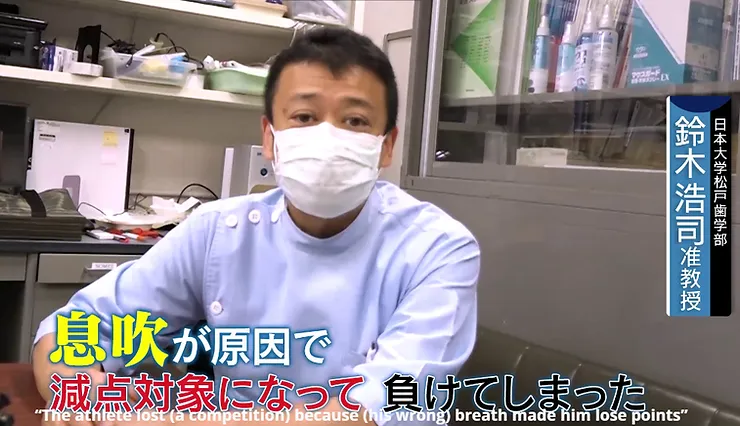
Olympic breath with TRP
We are proud that our TRP (Tongue Right Positioner) device was chosen by Dr. Suzuki (Assistant Professor of Dental Surgery at Nihon University) to prepare a Japanese athlete for the Tokyo 2020 Olympic Games.